Chamomilla
Clarke - Dictionary of Practical Materia Medica · John Henry Clarke · 24,268 chars · source ↗
 All books on Chamomilla →
Antidoted byAconitum NapellusAllium CepaAluminaAngustura VeraBelladonnaBorax VenetaCalcarea CarbonicaCamphoraChelidonium MajusCinchona Officinalis
All books on Chamomilla →
Antidoted byAconitum NapellusAllium CepaAluminaAngustura VeraBelladonnaBorax VenetaCalcarea CarbonicaCamphoraChelidonium MajusCinchona OfficinalisGeneral
Chamomilla.
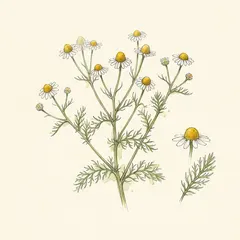
Matricaria chamomilla. N. O. Compositae. Tincture of whole fresh plant.
Clinical
Acidity. Anger. Asthma (from anger). Blepharospasm.
Catarrh. Coffee, effects of. Colic. Convulsions.
Cough. Cramp. Croup. Dentition.
Diarrhoea. Dysmenorrhoea. Dyspepsia. Earache.
Eyes: blepharitis; ophthalmia. Eructations. Erysipelas. Excitement.
Excoriation. Fainting fits. Fevers. Flatulence.
Flatulent colic. Gout. Gum-rash. Headache.
Hernia. Hysterical joint. Influenza. Jaundice.
Lienteria. Labour: disorders of; after-pains. Mastitis. Menstruation, disordered.
Miliary eruption. Milk-fever. Miscarriage. Mumps.
Neuralgia. Parotitis. Perichondritis. Peritonitis.
Pregnancy, disorders of. Red-gum. Rheumatism. Salivation (nocturnal).
Sciatica. Screaming. Sensitiveness. Spasms.
Speech, affections of. Toothache. Ulcers. Uterus, diseases of.
Waking, screaming on. Whooping cough.
Characteristics
"There is in Chamomilla a little thread of symptoms, and nearly always found running through it. This is a spiteful, sudden, or uncivil irritability" (Guernsey). Teste puts Cham. at the head of one of his groups, which includes Grat., Viol. t., Hell. n. The common feature of this group is: "A particular derangement of the cerebral functions and even of the whole nervous system; a painful increase of the sentient action, followed by a considerable depression of the vital forces, and a certain disorder of the mental faculties." In spite of its obvious analogies with Puls., Ipec., Acon., and Coni., it has marked and exclusive characteristics of its own.
"It increases the general nervous sensibility, and stimulates the cerebral functions: a property that seems to give rise secondarily to the various organic alterations that Cham. is capable of producing, and for which it has so often been given with success." "It appears," says Hahnemann, quoted by Teste, "to diminish" [i.e., curatively] "in a great degree, the excessive sensitiveness to pain and the violent derangements which pain occasions in the moral condition of the patient.
This is the reason why it appeases a multitude of sufferings to which coffee-drinkers, and persons who have been treated with narcotic palliatives are subject. And this is likewise the reason why it ought not to be given to those who bear pain patiently and with resignation. I mention this rule here, for it is of very great importance." Teste remarks an this that Cham. antidotes not only Coffea, but also Causticum, and most of the members of the Causticum group. Over-sensitiveness, with great irritability and crossness, is the leading note of the Chamomilla effects.
The pains are unbearable and drive to despair; the patient insists that the doctor shall cure them at once. Prostrating debility as soon as the pains begin. The senses are too acute. Bad temper (Nux is malicious).
Peevishness; ill-humour; anger, with rage, violence and heat. Cannot bear to be looked at. Cannot be civil to doctor. Impatience.
Cham. also corresponds to the effects of anger: colic, diarrhoea, jaundice, twitchings, and convulsions. Child cries, and must be carried about to be quieted. There is hot sweat on head. Stopped up colds, with dripping of hot water from nose.
One cheek red, the other pale. Face sweats after eating or drinking. The patient is hot and thirsty with the pains. Cham. is almost typical of the dentition state.
The toothache of Cham. comes on when entering a warm room or from drinking anything warm. There is fetor of breath, and of discharges in general. Biliousness preceded by anger. Gastralgia, food eaten lies like a load on stomach, hypochondria distended.
Tongue yellowish white. Bitter taste. Colic > by drinking coffee. The diarrhoea of Cham. is: stool hot, yellowish green; like chopped egg; offensive; excoriation round anus.
Intertrigo of children. Wind colic; belching of wind < the condition (this is characteristic). Menorrhagia dark clots; fetid; temper always < before and during flow (Nux also, but Nux is conscious of it, Cham. is not). Threatened abortion caused by anger.
The pain of labour or at menses is centred in the womb, bearing down, painful contractions, unbearable; they extend down thighs and are felt in the back. Leucorrhoea is acrid, watery, corrosive, smarting. Cham. has inflammation of the parotid glands, nocturnal salivation. Rheumatism compelling to get up and walk about; thirsty, hot, almost beside himself.
Muscles of face and hands twitch. Insomnia of children; start in sleep; twitching of hands and face; hot sweat of head and face; one cheek red. Puts feet out of bed; soles burn. Aggravation by heat is one of the most prominent features of Cham.
< By warm food. Cham. may be the remedy in croup, or croupy cough, if mental symptoms and time conditions correspond. W. H.
Baker (Rochester) has recorded such a case. A chubby boy, light hair, blue eyes had a croupy cough. Acon. and Spong. at first controlled it, but afterwards failed. The cough became a loose, rattling, suffocating cough; the mucus came up in the throat and nearly suffocated him.
Paroxysms at midnight. During the day he was hoarse; ever impatient, nothing seemed to suit him. Cham. c. m. cured, improvement setting in within two hours. "Chamomile tea" has removed the night-sweats of phthisis.
Dr. Anderson, of Dover, Delaware, relates the case of a man who had to change three to five times every night. A cup of weak chamomile tea was ordered every night. The second night there was slight diminution, the third he only had to change twice, the fourth once, and after that there was no more trouble.
The plant in this case was probably Anthemis cotula, or wild chamomile of U.S. Dr. Anderson learned its use from "an old woman." But the sweats of Chamomilla are also very marked, Nash mentions a characteristic in the association of numbness or alternation of it with pains. He relates the case of a man who had very painful rheumatism of left shoulder, and who got no better from the usual remedies, but was speedily cured by Cham., the indication being: "Numbness with the pains." Nash differentiates the restlessness of Aco. and Ars. from that of Cham. by the absence in the case of the last of fear of death.
The Cham. patient "would rather die than suffer so." Lying in bed <. Walking > backache and rheumatic pains. > Being carried about. Touch, and even looking at the patient, <.
Covering <. Pains recur in evening and are < before midnight. Symptoms generally < night. Warmth < most symptoms.
Cold > ulcers; a finger dipped in cold water and applied to the part > toothache. < From music. Heaviness and fulness of whole body from playing piano. There is desire for open air, and yet over-sensitiveness to open air, especially about ears.
Damp cold weather <. Windy weather <. Great dread of wind. Cham. is particularly suited to diseases of pregnant women, nurses, and little children.
Light or brown-haired persons. Arthritic diathesis.
Relations
Cham. antidotes: Coffee, and the narcotics. Especially opium as it corresponds to its secondary effects (useful in nerve storm when morphia is discontinued); the nightly headaches of Thuja. It is antidoted by: Aco., Alum., Borax, Camph., Coccul., Coff., Coloc., Coni., Ign., Nux v., and especially Puls. Puls. and Cham. antidote one another, and precede and follow each other well.
Compatible: Merc. sol., Sul., Puls. Complementary: Bell. in diseases of children (Cham. acts more on nerves of abdomen, Bell. more on cranial nerves.) Compare: in dentition, Bell., Borax, Calc., Tereb.; in over-sensitiveness, Aco., Coff., Hep., Hyo., Ign.; diarrhoea, parotitis, toothache, Merc. (Merc. has hard, pale swelling of face, Cham. red and hot); sour breath, constrictive gastralgia in coffee drinkers, Nux (Cham. has bad temper during menses; Nux has malicious temper); toothache < in bed at night;
< from warmth, Sul., Merc., Puls.; distension of abdomen unrelieved by eructation, Chi.; indignation and its effects, Coloc., Staph., Nux, Bry.; aversion to be looked at, Ant. c., Chi., Stram.; > by moving about, Rhus., Fer., Verat., (Ver. has maddening pains compelling to walk about, but there is none of the feverishness and excitement of Cham.); stopped catarrh, Nux, Samb., Sticta.; nocturnal salivation, Nux., Pho., Rhus.
Causation
Dentition. Anger. Indigestion. Pain.
Mind
Attacks of great anguish, as if the heart would break, with complete discouragement, excessive inquietude, agitation and tossing, groans and tears, accompanied often by drawing colic, and pressure at the pit of the stomach
Disposition to weep, and to be angry, with great sensitiveness to offence
Crying and howling
The child cries and wants to be carried on the arm
Quarrelsome and choleric humour
Mischievous disposition in children
Mental excitement, with strong tendency to be frightened
Hypochondriacal humour
Patients neither endure to be addressed by others, nor to be interrupted when conversing
Peevishness, ill-humour, absence of mind, taciturnity and repugnance to conversation
State of mental abstraction and inadvertence, as if plunged in meditation, with diminished comprehension
A sort of stupidity, and apathy to pleasure and to external objects
Desire for different things, which, when once possessed, are no longer cared for
Tendency to misapply words when speaking or writing
Frantic and furious delirium.
Head
Intoxication and staggering, on getting up in the morning
Vertigo, with fainting
Vertigo, with obscuration of the eyes
Vertigo chiefly in the morning, or in the evening, or after a meal, or after taking coffee
Headache on waking in the morning, or while asleep, sometimes with a sensation as if the head were going to burst
Pain as if caused by a bruise, and pressive heaviness in the head
Pullings, shootings, and beatings in the head, often only semi-lateral, with one red cheek; worse at night; in the open air; in the wind; better from warm coverings and when walking about
Cracking in one side of the brain
Hot, clammy sweat on the forehead, and on the scalp
Starting pain in the forehead, chiefly after a meal.
Eyes
Pain as of a wound, in the corners of the eyes
Shootings, burning, and heat in the eyes
Eyes inflamed, and red, with pressive pains, chiefly on moving the eyes and on shaking the head
Great dryness in the margin of the eyelids
Inflammation of the margin of the eyelids (esp. of the lower, which are swollen), with mucous secretion, humour in the eyes and nocturnal agglutination
Yellow colour of the sclerotica
Ecchymosis in the eye, and haemorrhage of the eyes
Spasmodic closing of the eyelids
Quivering of the eyelids
Distortion of the eyes
Pupils contracted
Sparkling before the eyes
Confused sight, more frequently in the morning than in the evening
Semi-lateral obscuration of the sight, on looking at anything white
Aversion to bright light.
Ears
Otalgia, with drawing and tensive pains
Shootings extending to the ears, chiefly on stooping, with disposition to be angry at trifles, and to take everything in bad part
Tinkling and buzzing in the ears
Sensation as if the ears were stopped, and as if a bird were scraping and fluttering in them
Sensibility of hearing; music appears insupportable
Inflammatory swelling of the parotids, as well as of the sub-maxillary glands, and those of the neck
Discharge of thin pus from the ears.
Nose
Wrinkled skin of the nose
Coryza, with obstruction of the nose
Ulceration and inflammation of the nostrils
Epistaxis
Coagulated blood from nose; viscid nasal secretion
Very acute smell.
Face
Face hot, red, burning or redness and heat of one cheek, with coldness and paleness of the other; or face pale, hollow, with distortion of features from pain
Heat of the face, while the rest of the body is cold
Swelling of the face
Erysipelas in the face, with hard and bluish swelling of one cheek
Swelling of one temple, with pain on being touched
Shooting, drawing, and pulsative pains in one side of the face
Red miliary eruption on the cheeks
Yellow colour of the skin on the face
Convulsive movements of the muscles of the face and of the lips
Lips cracked, excoriated, and ulcerated
Spasms in the jaws, with compression of the teeth
Wrinkles on the forehead.
Teeth
Odontalgia, most frequently semi-lateral, and chiefly at night, when warm in bed, with insupportable pains which almost induce despair, swelling, heat, and redness of the cheek, swelling, burning of the gums, and painful swelling of the sub-maxillary glands
The toothache recommences when entering a warm room
Toothache, after a cold and suppressed perspiration
Affects teeth on l. lower side; under jaw
The pains are commonly drawing and pulling, or pulsative and shooting, or searching and gnawing, in the hollow teeth, appearing frequently after drinking or eating anything hot (or cold), and chiefly after taking coffee
Toothache > by dipping finger in cold water and applying it to affected part
Loosening of the teeth
Dentition, with convulsions.
Mouth
Dryness of the tongue and mouth (with thirst), or flow of frothy saliva
Putrid smell of the mouth
Tongue red and cracked, or loaded with thick and yellowish coating
Blisters on the tongue and also under it, with shooting pains
Aphthae in the mouth
Convulsive movements of the tongue.
Throat
Sore throat, with swelling of the parotids, of the tonsils, and of the sub-maxillary glands
Inflammation of the soft palate and tonsils, with dark redness
Pains in the pharynx, shooting and burning, or a sensation as if there were a plug in the throat
Inability to swallow solid food, esp. when lying down
Burning heat in the throat, from the mouth to the stomach
Deep redness of the parts affected.
Appetite
Putrid or clammy taste
Acid taste in the mouth, and of rye-bread
Bitter taste in the mouth (early in the morning), and of food
Want of appetite, and dislike to food
Aliments cannot descend
Aversion to, or great longing for coffee, sometimes with nausea, or even vomiting, and attacks of suffocation, after having partaken of it
After eating, heat and sweat of the face, inflation and fulness of the stomach, and of the abdomen, risings and inclination to vomit
Excessive thirst for cold drinks.
Stomach
Risings, which aggravate the pains of the stomach and of the abdomen
Acid rising (the existing pain is aggravated by eructations)
Regurgitation of food
Nausea after eating, and chiefly in the morning
Uneasiness, and a sort of flabbiness in the stomach, as if the patient were about to faint
Vomiting of food, and of sour substances, with mucus
Bitter, bilious vomiting
Excessively painful pressure on the precordial region, as if the heart were going to be crushed, with cries, sweat, and anguish
Pressive gastralgia, as from a stone on the stomach, with difficulty of respiration, chiefly after eating, or at night, with inquietude and tossing, either renewed or mitigated by coffee
Burning pain in the pit of the stomach, and in the hypochondria
After eating or drinking, heat and perspiration of the face.
Abdomen
Tension and anxious fulness in the hypochondria, and in the epigastrium (in the morning), with a sensation as if everything was ascending towards the chest
Colic, after anger
Flatulent colic, with inflation of the abdomen, and accumulation of flatus towards the hypochondria, and the inguinal ring
Excessively painful colic, pullings and cuttings in the abdomen, sometimes in the morning, at sunrise
Sensation of emptiness in the abdomen, with constant movement in the intestines, and blue circles round the eyes
Burning cuttings in the epigastrium, with difficulty of respiration, and paleness of the face
Shooting in the abdomen, principally on coughing, on sneezing, and on touching it
Painful sensibility of the abdomen to the touch, with sensation of ulceration in the interior
Pressure towards the inguinal ring, as if hernia were about to protrude
Abdominal spasms.
Stool And Anus
Constipation, as from inertia of the rectum
Diarrhoea during dentition (green mucus)
Diarrhoea from cold, from anger, from chagrin
Diarrhoea chiefly at, night, with spasmodic colic, mostly with slimy, and whitish or watery, or yellowish and greenish faeces, or mucus mingled with excrement, like eggs when beaten up; or hot corrosive faeces, of a fetid odour, like rotten eggs; or evacuation of undigested substances
Haemorrhoids, with very painful fissures and ulcerations in the anus
Excoriation about anus (intertrigo).
Urinary Organs
Inclination to make water, with anxiety
On making water, itching and burning in the urethra
Urine hot and yellowish, with fleecy sediment; or turbid urine, with yellowish sediment
Involuntary or feeble emission of urine
Excoriation at the edge of the prepuce.
Male Sexual Organs
Itching, stinging pain in the margin of the prepuce
Swelling of prepuce (Sycosis)
Excited sexual desire.
Female Sexual Organs
Catamenia suppressed, with swelling and pressive pains in the pit of the stomach, and in the abdomen
Pains like those of labour, and general dropsy
Menstrual colic, before the catamenia
Pressure towards the uterus, as if from the pains of child-birth
Pains may occur by which the foetus is forced up instead of down
The labour-pains are not sufficient, but cause great restlessness and anguish (over-sensitive to the pains)
Violent after-pains
Metrorrhagia, with discharge of deep-red blood, and of clots, accompanied by labour pains
Discharge of blood between the regular catamenia
Burning pains and smarting in the vagina
Corrosive leucorrhoea, with smarting
Scirrhous induration of the mammary glands
Suppression of milk (milk is cheesy or mixed with pus; milk fever)
Puerperal fever
Erysipelas of the mammae and soreness of the nipples.
Respiratory Organs
Catarrh and hoarseness, with accumulation of tenacious mucus in the throat
Stitches and burning in the larynx, with hoarseness
Burning pain in the larynx
Spasmodic constriction in the gullet
Dry cough, produced by a constant titillation in the larynx, and under the sternum, chiefly in the evening, and at night in bed, continuing during sleep, and sometimes accompanied by a fit of suffocation
Wheezing and rattling in the trachea
Anger provokes the cough (in children)
Expectoration of mucus of a bitter or putrid taste.
Chest
Respiration short, croaking, or wheezing and stertorous
Deep respiration, with sensible rising of the thorax
Fit of suffocation, as if from constriction of the larynx or of the chest
Attacks of flatulent asthma, with anxiety and fulness in the precordial region
Oppression of the chest
Shootings in the chest, chiefly on breathing
Burning in the chest, with dizziness and anxiety
Shooting in the regions of the heart, with difficulty of respiration.
Neck And Back
Tensive stiffness of neck muscles
Glands swollen, often very sensitive; painful when turning neck
Aching pain in the sacrum, chiefly at night
Pain as of a bruise in the sacrum, with pulling pains, like those of labour, extending to the thigh
Shooting, pulling, tearing pain in the back
Painful stiffness in the loins, after having been seated some time
Insupportable pain in the loins and in the hip, in the morning, on the side opposite to that on which the patient is reclining
Convulsions in the back, with a throwing backwards of the head, and stiffness of the body as in tetanus.
Limbs
Cracking in joints, with pain in them as if bruised
Pain in periosteum of limbs with paralytic weakness
Convulsive single jerks in limbs
All joints sore as if bruised and tired out; there is no power in hands or feet, though without corresponding weariness.
Upper Limbs
Numbness and stiffness of the arms on grasping an object
Convulsions of the arms, with clasping in of the thumb
Nocturnal pains, with paralytic weakness in the arms
Swelling; or coldness; and paralytic stiffness of the hands; with cold perspiration in the palms of the hands
Numbness or convulsive movements of the fingers
Finger-joints red and swollen
Retraction of thumbs.
Lower Limbs
Paralytic and drawing pain in the hip and in the thigh, extending to the feet, chiefly at night
Tension of the muscles of the thighs, and of the legs
Cramps in the calves of the legs, chiefly at night
Tearing sensation, with a paralytic condition of the feet, at night
Cramp
Cracking of the knee during motion
Burning in the soles of the feet (at night, he puts his feet out of bed)
Sensation of numbness in the toes
Burning and itching in the feet, as from chilblains
Swelling of the foot and of the sole of the foot.
Generalities
Rheumatic, drawing pains, chiefly at night in bed, with paralytic state, and sensation of torpor in the parts affected, and inclination to move them continually; mitigated by external heat Pain with thirst, heat, and redness (of one) of the cheeks, and hot sweating of the head Pulsative pains, as from an, abscess Over-excitement, and excessive sensibility of the nervous system, with great sensibility to pain, which appears insupportable and induces despair
Over-sensitiveness of the senses (esp. from coffee and narcotics) Great sensibility in the open air, and principally to wind The extremities feel, as it were, stiff and paralysed Great weakness and inclination to fall, with prostration of strength to fainting as soon as the pain commences
Syncope, with sensation of sinking and faintness in the precordial region Attacks of catalepsy, with hippocratic face, extremities cold, eyes half-closed, pupils dilated and dull Attacks of spasms and of convulsions, with face red and bloated, and convulsive movements in the eyes, the eyelids, the lips, the muscles of the face, and of the tongue Epileptic convulsions, with retraction of the thumbs, and foam before the mouth, preceded by colic, or followed by a lethargic state
Urgent inclination to remain lying down; a child will neither walk nor be carried in the arms Cracking, and pain resembling a bruise, in the joints.
Skin
Miliary eruption, with itching and nocturnal tickling
Unhealthy skin; every injury tends to ulceration
In the ulcers, tingling, itching, burning, and jerking shootings, with excessive sensibility to the touch
Itching pimples form around the ulcer, covered with scurf, and suppurating
Yellow colour of the skin (over the whole body)
Rash of infants and during nursing
Red rash on the cheeks, on the forehead
Inflammatory swelling of the glands.
Sleep
Yawning and stretching
Sleepiness, during the day, without being able to sleep, on lying down
Coma, and coma-vigil, with pulling pain in the head, and nausea, or with feverish restlessness, short respiration, and thirst
Nocturnal sleeplessness, with attacks of anguish, visions, and illusions of the sight and hearing
Snoring breathing when asleep
On sleeping, starts with fright, cries, tossing, tears, talking, raving, groans, snoring, and constant separating of the thighs
Fantastical, lively, quarrelsome and vexatious dreams, with morose and sullen aspect
Nocturnal delirium.
Fever
Pulse small, tense, accelerated
Constant alternation of cold, or of partial shuddering, with partial heat, in different parts of the body
Chilliness and coldness of the forepart of the body, while the back part is hot, or vice versâ
General heat, esp. in the evening, or at night in bed, with anxiety, thirst, redness of the cheeks, hot perspiration of the head, at the forehead, and the scalp; and sometimes, chiefly on uncovering the body, mixed with shivering or shuddering
After or during the heat, sour sweat, which causes an itching on the skin
Burning heat and redness (often only in one) of the cheeks, chiefly at night, with groans, tossing, and cold or heat in the rest of the body
Intermittent fever, with nocturnal aggravation, pressure on the pit of the stomach, nausea or bilious vomiting, colic, diarrhoea, and painful emission of urine
Chilliness, with internal heat
Chill and coldness of the body, with burning hot face and hot breath
Nocturnal sweat, when asleep
Continuous burning heat, with violent thirst, and starts during sleep, and furious delirium.